
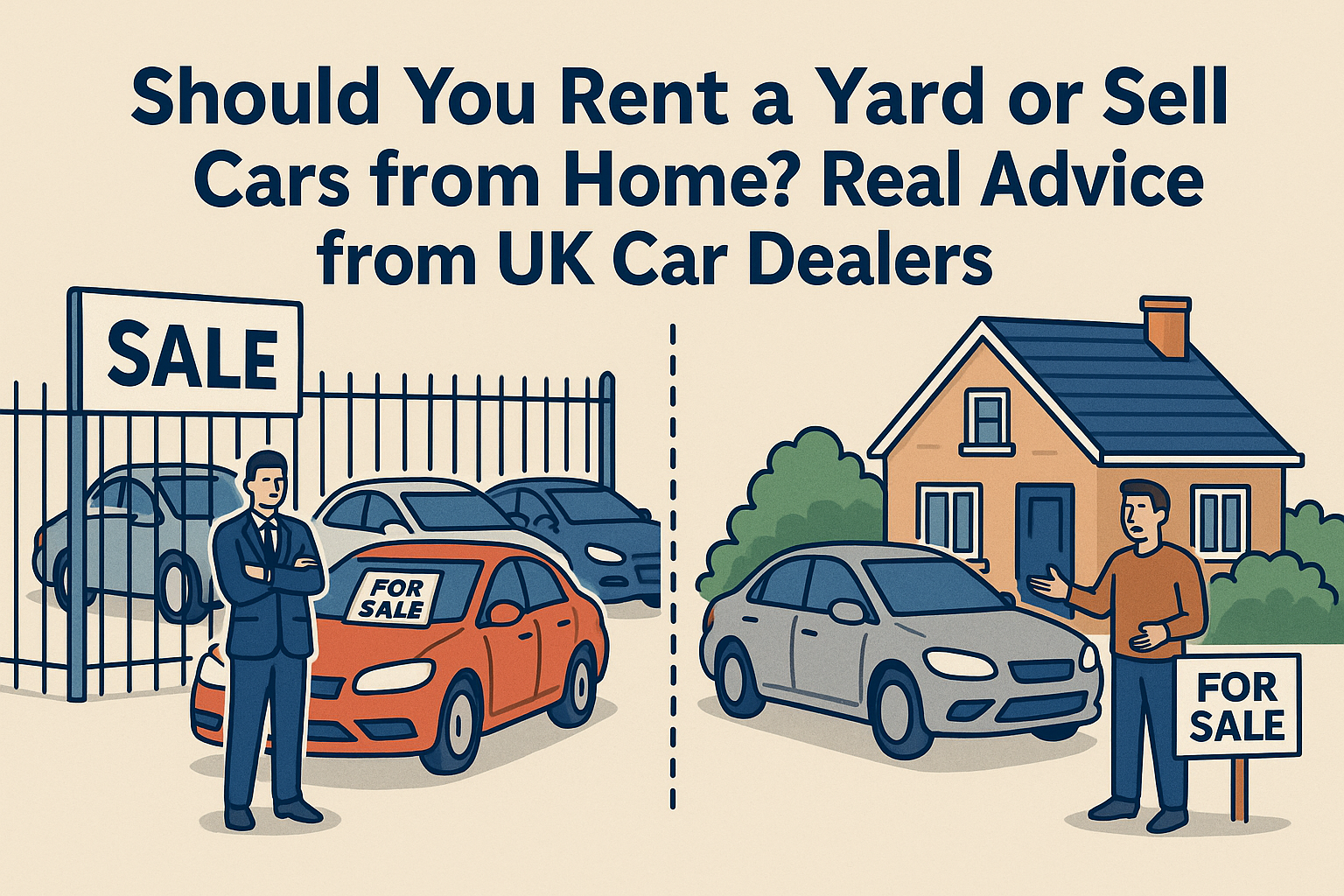
Starting a car dealership can be one of the most exciting and nerve-wracking steps in your automotive journey. For many small independent traders across the UK, the big question is this:
Is it worth renting a yard or selling site — or is it smarter (and safer) to continue trading from home?
It’s a topic that divides opinion among motor traders, especially in today’s uncertain economic climate. With rising rents, changing consumer habits, and increased digital opportunities, the choice isn’t as clear-cut as it once was.
Below, we’ll explore both sides of the debate and share real feedback from car dealers across the UK who’ve been in your shoes — all gathered from recent online discussions in dealer groups. Their stories highlight the pros, cons, and real-life lessons that can help you make an informed decision for your business.
The Big Decision: Yard vs Home
Traditionally, selling cars meant renting a forecourt, small unit, or yard where customers could browse in person. It offered visibility, credibility, and space for stock.
But times have changed.
Many successful independent dealers now operate directly from home — managing everything online through classified listings, social media, and professional car dealer websites like the ones we create at CarDealersWebsites.co.uk.
With the right setup, you can look just as professional as a large forecourt dealer — without the heavy monthly costs.
Still, the decision depends on your finances, risk appetite, and growth goals. Let’s explore what experienced dealers have to say.
When a Yard Becomes Too Costly
One experienced dealer explained that the move from home trading to renting a unit was a “massive jump in cost.†In his area, even a small yard meant £1,000+ per month in rent, before adding insurance, business rates, utilities, and security.
He warned that even if you have a slow start, “those bills don’t stop just because you’re not ready.â€
His advice was clear:
“Ensure you have enough funds set aside as an emergency that can cover at least two months of rent before taking the plunge.â€
That’s the kind of real-world insight that many new traders overlook. It’s easy to get caught up in the excitement of expansion, but without a cash buffer, a slow sales period could become a financial nightmare.
The Current Market: A Time for Caution?
Another dealer with a large fleet gave a sobering warning:
“Now is not the time for this. The country is struggling, and people are cautious with money.â€
He noted that big chains like Evans Halshaw have closed some branches — a sign of wider market pressures. With potential changes to car taxes, electric vehicle incentives, and even “pay per mile†ideas discussed in government circles, the car trade could soon look very different.
His advice?
“Wait until after the next Budget before committing. The market could shift overnight.â€
That perspective shows how external factors — like inflation, interest rates, and government policies — can dramatically affect your profitability. Timing, not just ambition, can make all the difference.
The Balanced View: Preparation and Process Matter
Others suggested a more balanced approach. One trader pointed out that your decision should depend on how ready you are operationally and financially.
He asked an important question:
“Are you looking for a customer-facing site or just a small unit for more space and appointment-only visits?â€
If you’re still building your customer base and don’t have a strong financial cushion, he recommended staying lean and working from home until you absolutely can’t manage anymore.
But if you’re well-prepared, disciplined, and ready to scale, then moving into a yard can unlock new opportunities. He shared this simple but powerful advice for success:
“Do the basics right — great photos, walk-around videos, clean cars, and strong processes. You’d be surprised how many dealers get complacent.â€
That’s the truth. Whether you sell from home or a unit, presentation is key. Buyers shop online first — meaning your digital presence and photos often matter more than your physical location.
The “Just Do It†Attitude
Of course, not everyone believes in waiting.
One optimistic trader encouraged others to take the plunge:
“Don’t listen to anyone — just do it! Buy one, buy two, buy three, and you’ll be away! If your cars are priced right, they’ll sell.â€
There’s value in that mindset too. Confidence and drive are essential in the car trade. Every successful dealership started with a first car, a first customer, and a big leap of faith.
But — as others cautioned — optimism should be backed by planning. For every dealer who thrives, another struggles under rent and insurance costs.
Overheads Can Kill Profit
Several contributors pointed out that moving into a yard means new obligations: rent, insurance, utilities, waste disposal, and sometimes even staffing.
As one trader said bluntly:
“Stay as you are — we’re moving into a downturn. Mortgage rates, lack of decent stock, and extra costs can eat your profits.â€
The average small yard in the UK now costs between £12,000 and £30,000 per year, depending on size and location. Add a deposit and setup costs, and your first year can easily exceed £40,000 in outlay — before selling a single car.
If your monthly profit margins are slim, that can quickly become unsustainable.
Keep Overheads Minimal — Make It Before You Spend It
Another dealer summed it up perfectly:
“Keep your overheads as minimal as possible. Start making it before you start spending it.â€
That’s one of the golden rules of the motor trade. You don’t need a shiny showroom to be successful — you need the right stock, pricing, presentation, and marketing.
And that’s where your online presence plays a huge role.
At CarDealersWebsites.co.uk, we’ve seen hundreds of small traders grow from selling a few cars at home to running thriving dealerships — simply because they invested in a professional website that builds trust and attracts customers 24/7.
Taking the Middle Step
One experienced trader shared how he took a “middle step†before committing to a full yard.
He started with a small space on a farm — £10,000 per year on a 30-day rolling basis — before moving to a larger unit that now costs £33,000 annually.
He said:
“Was it daunting? Yes. Did it work? Yes. But I only did it once I had the customer base, the processes, and the capital ready.â€
This is a smart route for many traders. Renting flexible or shared spaces can help you test the waters without long-term commitments.
When Selling from Home Wins
Not everyone dreams of a yard. Some dealers can’t wait to get out of one.
One honest trader admitted:
“I dream of selling from home after getting out of my site. Less bills, less overheads, less screamers!â€
Another added:
“Just keep doing it from home. Pay someone to store your cars — it will work out much cheaper.â€
For many part-time or small-scale dealers, home trading simply makes sense. With digital marketing, you don’t need passing traffic — you just need online visibility.
A good website, Google Business Profile, and consistent listings can give you all the reach you need.
Motivation and Mindset: The Deciding Factor
At the end of the day, your attitude determines success more than your location.
As one trader put it:
“It all comes down to you. If you’re determined, hardworking, and motivated, you’ll make it work.â€
He shared how he left main dealer life ten years ago to take over a small site. At first, he expected instant success — but soon realised that effort and consistency matter more than anything.
“I wasn’t as hardworking as I thought, but I’m still here. You really do reap what you sow.â€
That honesty highlights the truth: it’s not about where you sell — it’s about how well you sell.
Digital Dealers: The New Generation of Car Traders
With most car buyers starting their search online, the physical location of your cars matters less every year.
Modern consumers browse via AutoTrader, Motors, Gumtree, and Facebook, often making enquiries before ever seeing the car in person.
That’s why your website and online presentation are critical.
At CarDealersWebsites.co.uk, we design and manage websites built specifically for small car dealers — helping you look professional, gain trust, and appear on Google even if you operate from home.
We handle everything — from photos and stock uploads to Google submission and mobile optimisation — so you can focus on buying and selling cars, not on web design.
So — Yard or Home? The Verdict
Here’s a balanced summary of what experienced dealers suggest:
Selling from Home — Pros:
- ✅ No rent, insurance, or business rates
- ✅ Lower risk while testing the market
- ✅ Easier to scale slowly
- ✅ Ideal for part-time traders or side businesses
- ✅ With a good website, you can still appear professional
Selling from Home — Cons:
- ⌠Limited stock space
- ⌠Some customers may be hesitant to visit a home address
- ⌠Harder to build a physical brand presence
Renting a Yard — Pros:
- ✅ Looks professional and gives credibility
- ✅ More space for stock and valeting
- ✅ Easier to attract walk-in customers
- ✅ Suitable for growth and team expansion
Renting a Yard — Cons:
- ⌠High fixed costs (rent, insurance, utilities)
- ⌠More risk during slow sales months
- ⌠Longer commitments and deposits required
Final Thoughts
There’s no one-size-fits-all answer. Every dealer’s situation is unique. But what’s clear is that you don’t need to rush.
Start lean, build your reputation online, and expand only when your customer base — not your ambition — demands it.
Whether you’re selling from a driveway, a farm, or a forecourt, success in today’s motor trade depends on digital visibility, trust, and presentation.
And that’s where we can help.
If you’re a UK car dealer — new or established — looking to grow your online presence, visit CarDealersWebsites.co.uk to see how we can design a fully managed, Google-optimised car dealer website that helps your business stand out.